-
Hello,
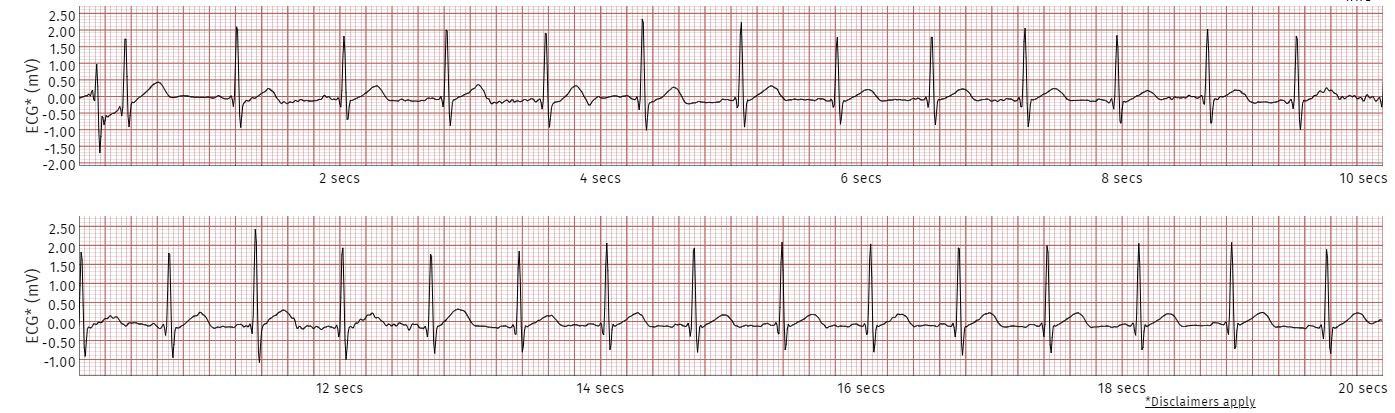
Recently picked up the X2 because I’m training for an ultra marathon and have noticed some strange heart fluttering ever once in awhile when I’m running or even resting. I’ll post my ECG from my workout later today maybe someone can help me determine if it’s normal. I’ve been watching some how to videos online, a bit of a learning…Read More
![]()
![]() 1 Comment
1 Comment -
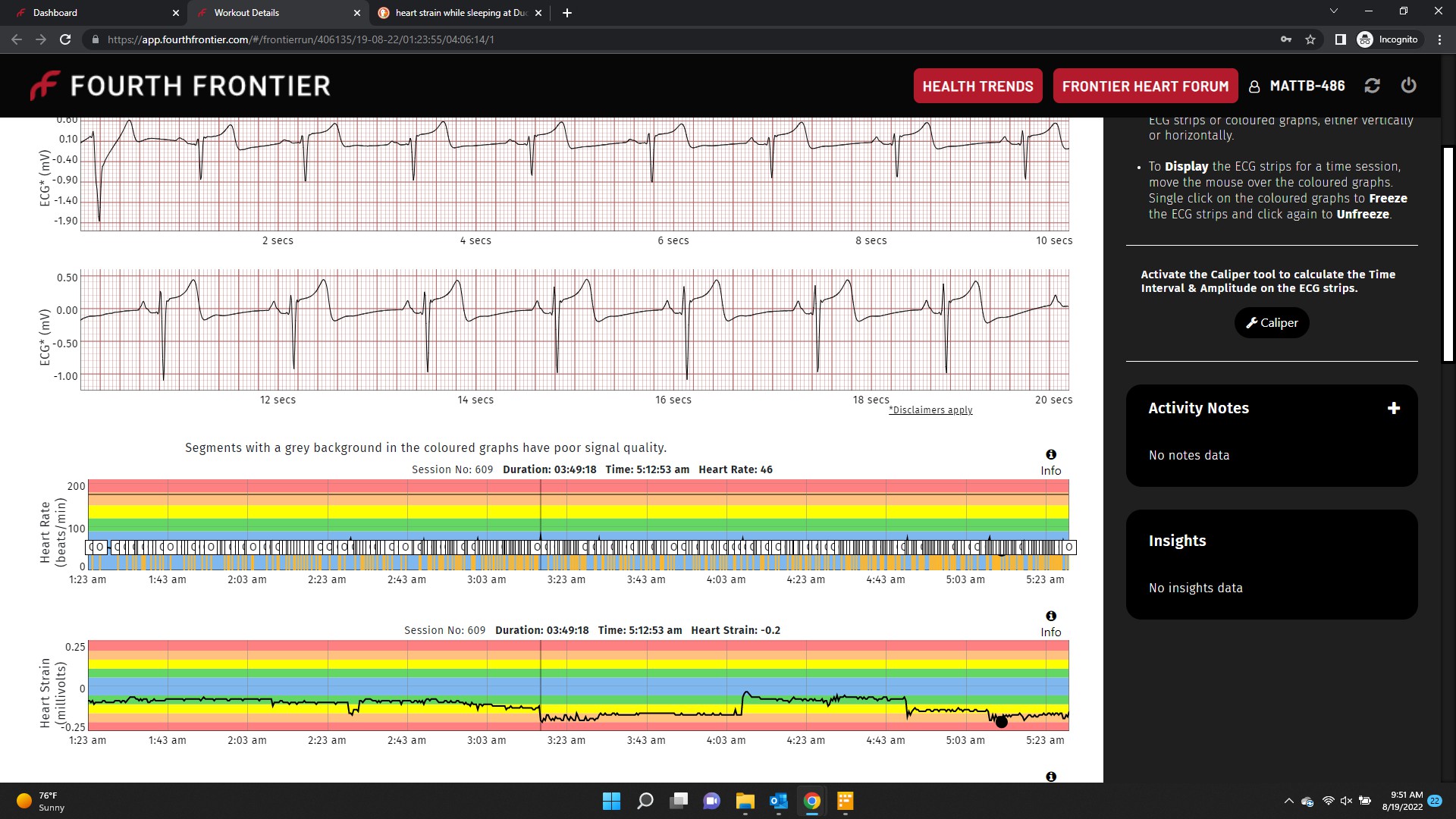
Been having a lot of PVC’s lately. My doctor said they are benign…and my heart is structurally strong. I’m a competitive mountain bike racer and have noticed some strange behavior when monitoring my sleep.
Wondering why my heart strain is dipping into dangerous levels during my sleep?
![]() 6 Comments
6 Comments-
![Profile picture of KallseN]()
I would recommend you get a stress test. I am not a doctor, but your tracings look abnormal and your ST segment is raised – a lot..
-
![Profile picture of carterit]()
Agree with kallseN that it’s worth further investigation. On the plus side a lot of athletes would get an abnormal ecg result based on voltage criteria – I have myself, several times. However your QRS wave is ba
-
![Profile picture of carterit]()
…is mainly negative and the st segment warrants looking at.
-
![Profile picture of carterit]()
…in fact looking at the overnight ecg as magnified as possible i would query long qt. Apparently the QT segment durations in males should be between 350-430 msecs and if >=450 msecs you should possibly get it ruled out as your QT segment durations seem to be consistent around 460-480 msecs. Currently my own heart strain reading seems to vary…Read More
-
![Profile picture of carterit]()
..and all the flag posts may be because of your low HR . Apparently the typical RR interval should be between 600-1200 msecs and because you are bradycardic yours is about 1300 msecs , so I suppose it depends on exactly what the x2 algorithm is checking. LAFB may also be worth ruling out as that seems to show similarities to your ECG ie T wave…Read More
-
![Profile picture of carterit]()
…and just noticed on my own ecg during sleep, and mine also shows lots of flag post warnings in the couple of hours before I got up – and for a lot of that my HR was 45-46 bpm, so it may be the slow bradycardia sinus rhythm that’s triggering these. My heart strain did stay mainly in the blue /green during the night though.
-
-
I am now in my mid 60s but still go to the gym most days and concentrate on aerobic activities ie Xtrainer, concept 2 rower, stairmaster stepper and spin classes / watt bikes.
I used to be a competitive road at times, and x country runner to a decent standard, over distances such as 5k, 5M,10K,10M and half marathon until OA of the knees…Read More
![Profile Photo]() liked this
1 Comment
liked this
1 Comment-
![Profile picture of TheresaS]()
Your first diagnosis gives me little faith in the medical establishment.
-
-
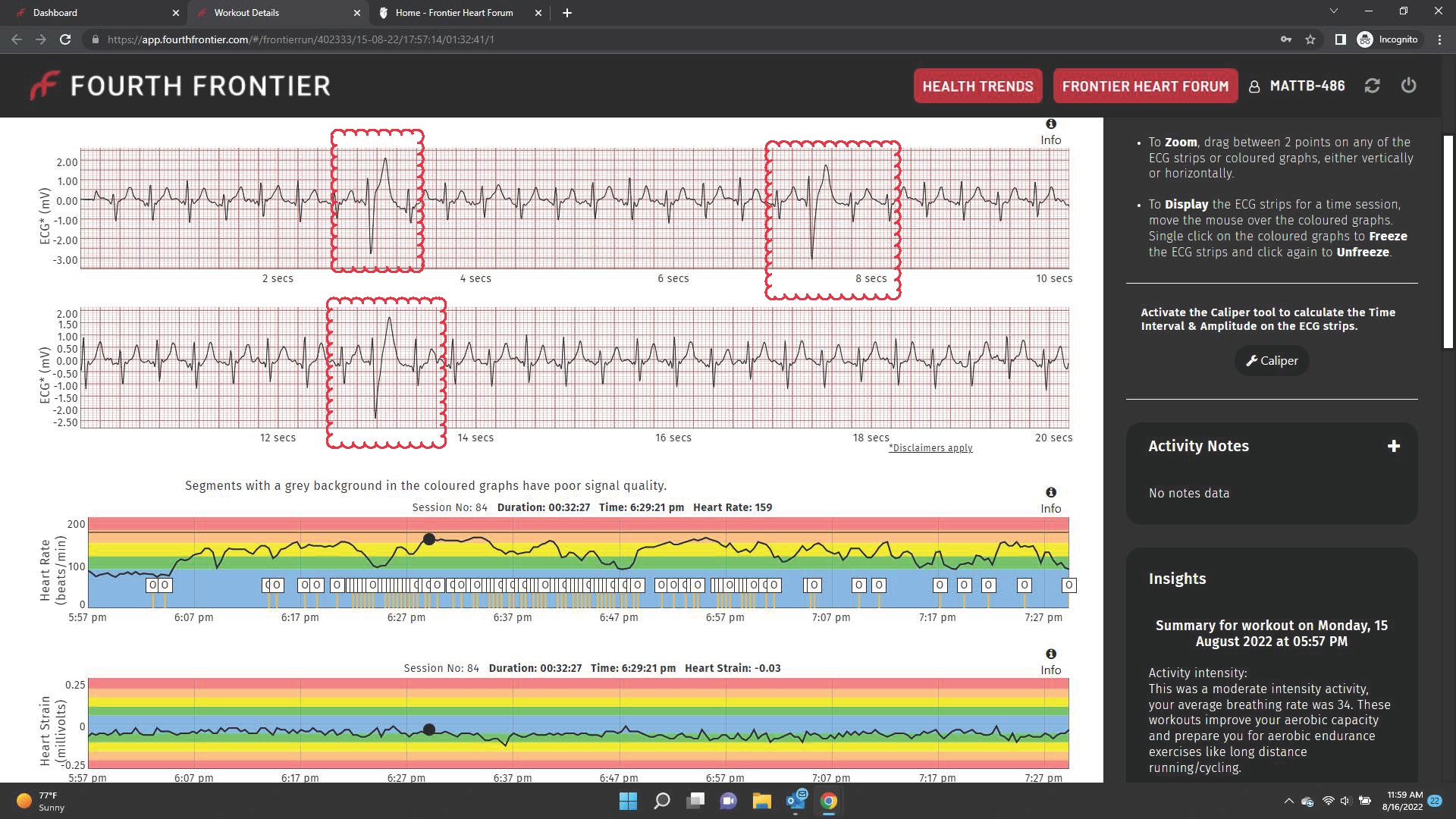
Hey there, just got the X2 in the mail today and gave it a first go on my Peloton. I am a recent heart transplant patient: I am 31 years old, F, and received my new heart on May 27th, 2022. Is something like this normal? Seems like it dips down significantly.
![]()
![Profile Photo]()
![Profile Photo]() liked this
2 Comments
liked this
2 Comments-
![Profile picture of policedoc]()
Likely you have the sensor inverted on your chest strap, Tory. Next workout, simply make sure that the button is on the side face the ground. That should invert the positioning of the ECG. HTH
-
![Profile picture of Barb]()
That’s as normal as can be given a heart transplant. Or not, it would be hard to tell. Please take a look at what NSR normal sinus rhythm looks like; p wave followed by QRS wave, then t wave. The sensors record according to the position on your chest, p is upright, r is also positive, S wave is negative, the dip I think you’re describing. It’…Read More
-
-
-
![Profile picture of carterit]()
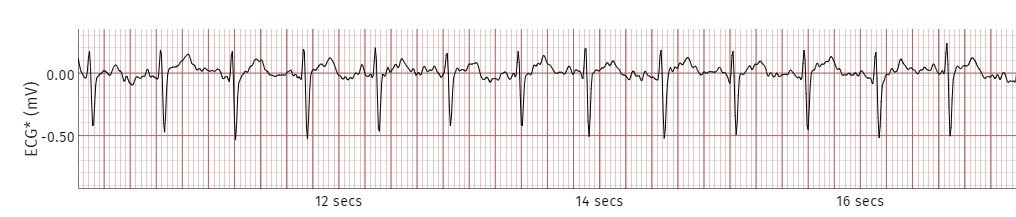
Looks very similar to the PVC’s that i occasionally get during exercise (see attached file) . What were you doing during this period , if you don’t mind me asking. PVCs tend to be more frequent as we get older, but in many cases can be benign. However if you have loads during an aerobic exercise eg running (eg > 10-15% other rhythm, then may be…Read More
![]()
-
![Profile picture of corvitus]()
You have some PVCs. Can you feel these in your chest when they happen? How many do you have per minute ? I want to say don’t worry about them but it’s more complicated than that so you should ask your doctor who will drill into family history and general health to assess risk.
-
![Profile picture of Barb]()
PVCs are tricky, do you want to be treated for something that doesn’t give you symptoms? If you have sustained pvcs, one after the other >5 or 6 in a row, then consider treatment.
-
- Load More Posts


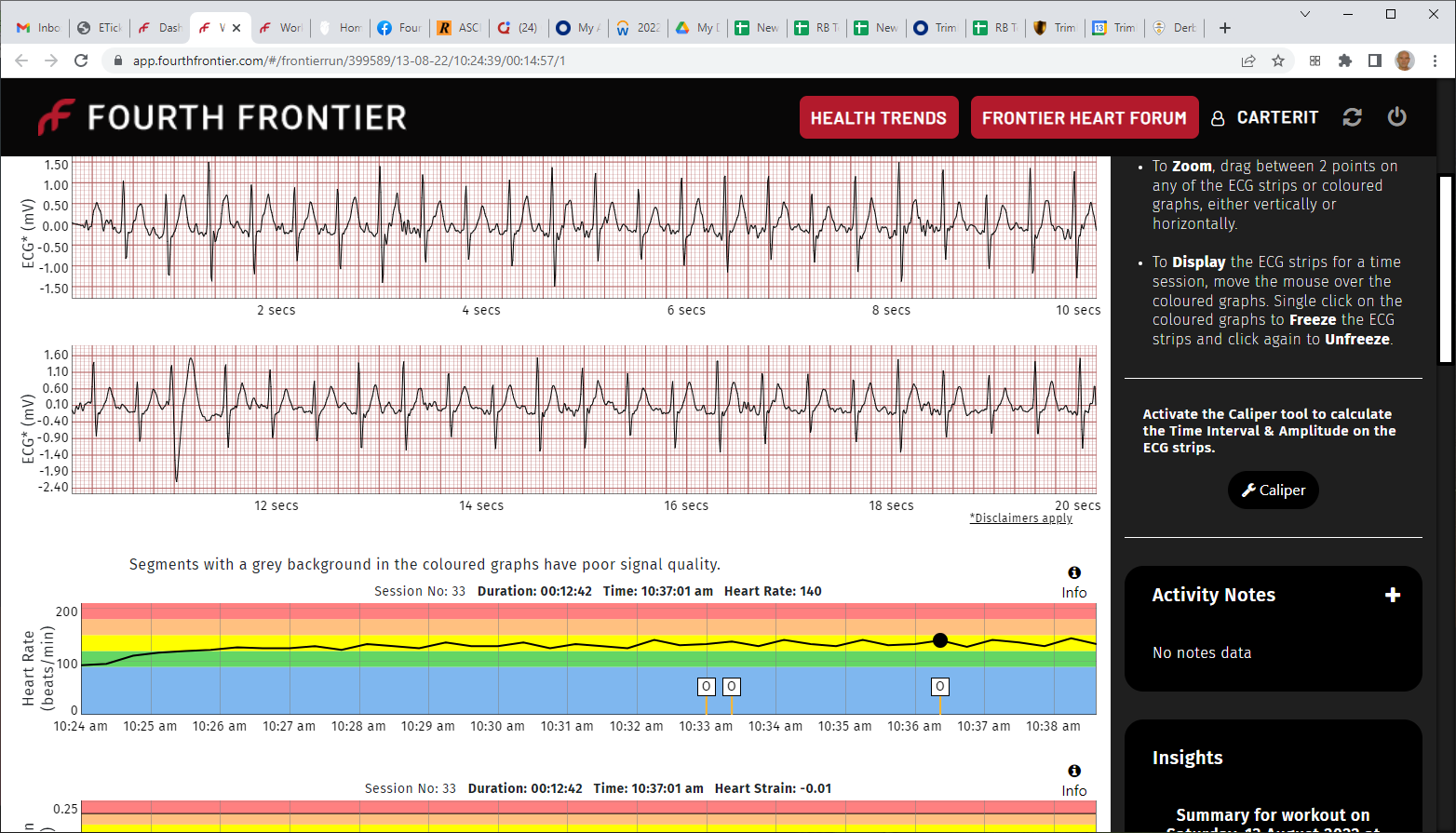

Your X2 has a blue button on the bottom of the unit. When you feel palpitations or flutters press that button and it will mark it on your ecg report. Then you can post the images of the flutter.